Rhetorical Text Creation and Analysis
Rhetorical Text Analysis
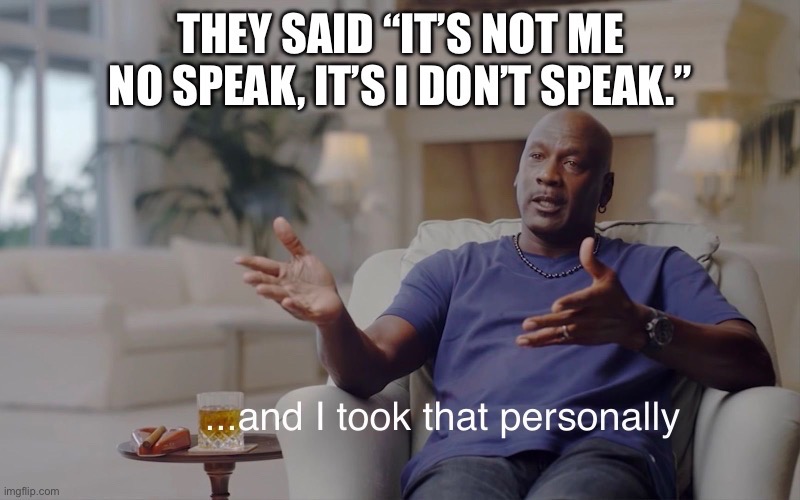
In pursuit of an argument, I chose to create a meme that demonstrates the commonality that the majority of the world faces when speaking “proper” English. In modern society, students are usually taught to speak “proper” tongue with the right slang, particularly understanding the right format of punctuation and pronunciation. Everyone has their own style of English based on their tongue, as long as you’re insinuating the same message and meaning, then that’s perfect English. This idea of a meme was inspired in spite of those who cast out others based upon not speaking English that they are accustomed to. The meme portrays a real life scenario on what discrimination towards a certain slang of English would look like in a real situation, detailing how a meme as such can relate to those who view it in their personal lives. My intended audience was meant for students in my own or the next generation and for people whose first language was not English. Many students must understand the discrepancy between speaking formalized or “proper” English and how a certain statement of mockery can change the dynamic of how a person continues to convey themselves in the English language. The meme greatly impacts individuals whose first language wasn’t English because of their effort of insinuating the same message, however it is pronounced differently and ultimately judged hastily in society. Developing a meme became the best way to unfold the blueprint of distinguishing the battle in the English language based on tongue and pronunciation. The meme generates a focal point that society has battled not just in modern day society, but throughout history in totality. With the English language there is always a battle between which English is considered correct or incorrect, however the meme emerges as a mediator to grasp an example on how these conflicts
occur, and accepting other tongues of English as it relates to the same meaning. When creating the meme, I used rhetorical strategies such as Satire, Analogy, and Pathos to generate proper meaning behind tongue in the English language. The Satire portion is the meme itself with Michael Jordan’s infamous “and I took that personally” as it relates to the English tongue in correlation to real life predicaments that occur on a day to day basis. The Analogy chunk of the meme envelops viewers to realize the connection between Michael Jordan’s quote and the example of another made up quote used to come into full swing of realization. The Analogy logs viewers into acknowledging and possibly having their own relation to the example presented by the meme itself. The Pathos reference creates imagery inside of viewers’ heads of experiences either they’ve faced that are similar, or an abstract feel of a scenario that they’ve seen or heard of. When it comes to the different tongues in the English language, there are many different types of emotions from how one is judged, creating the spark of Pathos in a small compact meme that speaks volume. As a whole, readers should absorb the emotion behind the example presented in the meme and generate an understanding of how important a particular statement can be. Viewers should incorporate this meme for future use in accepting and understanding another tongue or slang of the English is more than acceptable in every society, whereas society puts people down for not speaking English created in an era that none of us were born in. Regardless of the meme’s satire aesthetic, it is important to comprehend the concept of English being for all and as long as the same message is being conveyed, English is acceptable for all no matter what. To conclude my creation of this meme, it was made to argue against the unfair shading on other tongues from those who speak English differently. The meme opens up a world where it connects people together in understanding how English can be judged and is judged, to the next steps in assuring how this doesn’t continue further on in different stanzas of life.

